
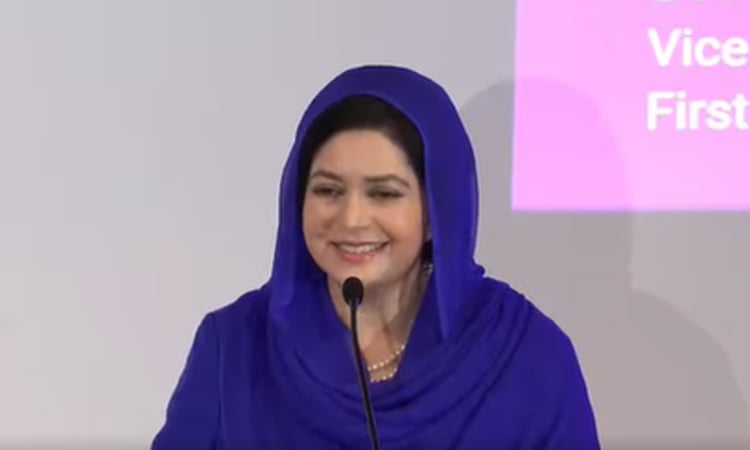
Dr. Zubaida Rahman has called for stronger international partnerships and innovative financing to transform women’s healthcare in Bangladesh.
“Traditional development assistance alone cannot meet the healthcare demands of our growing population. Innovative financing combined with national commitment, concessional investment, grant-supported technical assistance and sustainable domestic resources are needed,” she said.
She made the remarks while addressing a high-level session titled “The Moment is Now: Unlocking New Capital for Women’s Health Beyond Aid” at the World Health Summit in Berlin on Sunday.
“Our country will, Insha’Allah, demonstrate how political commitment, innovative financing and international partnerships can transform women’s health,” said Dr. Zubaida, Vice-President of the Ziaur Rahman Foundation and wife of Prime Minister Tarique Rahman.
She urged international partners, development finance institutions, philanthropic organisations and the private sector to join Bangladesh in strengthening women’s healthcare.
“A shift from fragmented projects to stronger health systems, from short-term aid to sustainable investments, and from political commitments to measurable results is required,” she said.
Dr. Zubaida said investment in women’s health was not merely an expenditure on healthcare but an investment in human capital, economic prosperity and the future of nations, noting that women account for almost 51 percent of Bangladesh’s population.
She said the government, under the leadership of Prime Minister Tarique Rahman, was committed to expanding investment in women’s health beyond maternal care to address adolescent anaemia, maternal malnutrition, preventable maternal and newborn deaths, and deadly cancers affecting women.
The government’s broader initiatives, including Family Cards, Farmer Cards and free education up to graduation level, are also helping create opportunities for girls and women, she said.
Highlighting the need to strengthen maternal and newborn healthcare, Dr. Zubaida said the government planned to recruit 100,000 community and well-being workers, almost 80 percent of whom would be women, alongside 25,000 additional professional midwives to expand services across the country.
The initiatives aim to promote safe normal childbirth, reduce unnecessary medical interventions and ensure that every woman receives skilled and compassionate maternity care, she said.
“No woman in any corner of Bangladesh should need to travel beyond her upazila health complexes, sub-district tier, or district hospitals to receive comprehensive essential maternal and newborn healthcare,” she said.
She stressed that a woman’s survival during childbirth should never depend on her ability to travel to Dhaka or afford expensive private treatment, describing the goal as a commitment to equity, dignity and social justice.
Dr. Zubaida also highlighted the contributions of Shaheed President Ziaur Rahman and former Prime Minister Begum Khaleda Zia to rural development, family planning, girls’ education and women’s empowerment.
She said the former president’s emphasis on rural development, community participation and family planning had helped lay the foundation for social development, while Begum Khaleda Zia’s initiatives to expand girls’ education, particularly secondary school stipends, had created opportunities for generations of young women.
Dr Zubaida Rahman also highlighted Bangladesh’s new Women’s Health Initiative, which focuses on preventing avoidable deaths from cancers affecting women.
She expressed gratitude to the United Nations Population Fund (UNFPA) and the European Investment Bank (EIB) for their partnership in advancing women’s healthcare.
“Every girl in Bangladesh deserves a safe childhood, every mother in every household deserves safe childbirth, and every woman in both rural and urban areas deserves the opportunity to live a long and productive life,” she said.
Dr Zubaida Rahman attended the session as the guest of honour.
The event brought together government representatives, development finance institutions, international health organisations and private-sector leaders to explore innovative ways to mobilise funding for women’s health beyond traditional aid.
UNFPA Executive Director Diene Keita, Ghana’s Health Minister Kwabena Mintah Akandoh, EIB Vice-President Marek Mora, Birgit Pickel of Germany’s Federal Ministry for Economic Cooperation and Development, and Dr S. M. Ziauddin Hyder, Special Assistant to the Prime Minister on Health Affairs, were among the participants.
Meanwhile, Bangladesh’s participation in the World Health Summit featured the announcement of an agreement to redirect a 250-million-euro sovereign loan from the EIB towards a dedicated Women’s Health Initiative.
The initiative aims to reach approximately 47 million women and girls between 2027 and 2031, with UNFPA partnering with the government to implement the programme.
During the summit, the Bangladesh delegation took part in discussions on sustainable health financing and South-South cooperation in midwifery.
The delegation also held meetings with international health institutions and private-sector partners, including Bayer, Roche, the Berlin Institute of Health and Charite – Universitatsmedizin Berlin, to strengthen collaboration in women’s healthcare and reproductive health services.
-BSS

