How to Spot AI Deepfake Images Through Training

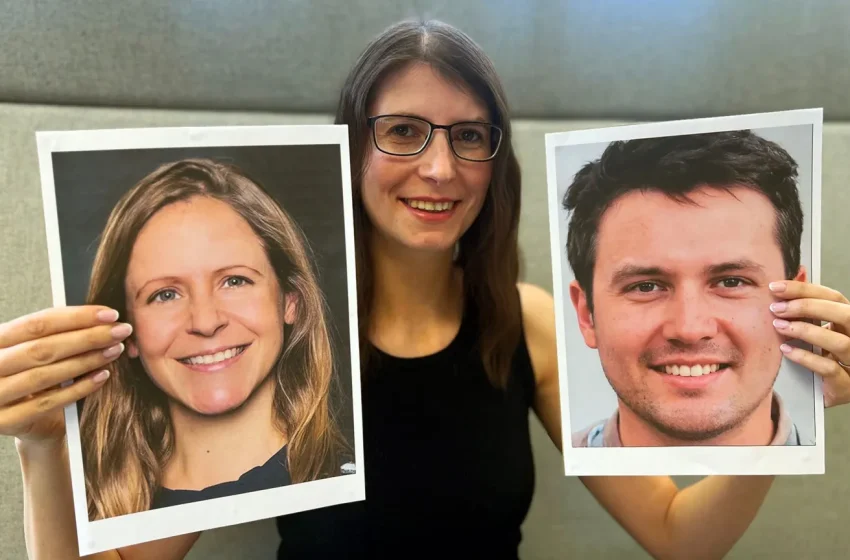
One of these photos, being held by Dr Clare Sutherland, is an AI-generated deepfake
Researchers from the United Kingdom and Australia found a new way to spot artificial intelligence deepfakes. Specifically, they can successfully train people to identify these fake images. By studying specific facial traits, humans quickly learn to spot pictures that machines create.
Psychologist Dr Clare Sutherland from the University of Aberdeen is working with an Australian colleague on this issue. Moreover, artificial intelligence makes very realistic pictures today. Therefore, average people struggle to tell real photos from fakes.
In the past, spotting computer-generated images was quite easy. Fraudsters often used pictures with obvious mistakes. However, modern artificial intelligence learns from its errors and improves rapidly.
Prof Amy Dawel directs the Australian National University Emotions and Faces Lab. She leads a research team across Australia, Canada, and the UK. “Training on visual artifacts, like looking for a sixth finger or odd earrings, has had limited success, partly because the AI is getting too good, and fraudsters may avoid using pictures with obvious flaws anyway,” explained Prof Amy Dawel.
Training the Human Eye
The researchers created thousands of fake faces using a powerful image tool called StyleGAN3. Interestingly, Dr Sutherland noted that the research team naturally developed a skill for spotting fakes. They did this simply by looking at them. “So we thought, OK, it would be really interesting to see if we could teach other people this too,” she said.
Consequently, the training focused on six visual traits. First, participants learned to check for symmetry. Fake images often miss human quirks like a drooping eyelid or a crooked smile. Regarding these overly perfect faces, the researchers noted, “If it’s too good to be true, it probably isn’t.”
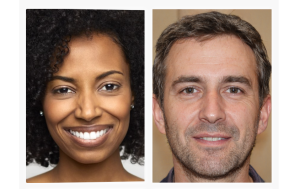
Next, they studied facial proportions. Very large noses or sticking-out ears rarely appear in computer-generated images. Another important trait is attractiveness. “AI faces tend to look more attractive,” explains Sutherland. “That one is more subjective, an aesthetic judgement, but AI often creates faces that are pleasant looking.”
Additionally, fake faces lack unique details. “That could be something like ‘what would make a face stand out in a crowd?’ AI faces do tend to cluster towards the average. So they look a bit more generic,” she added.
Furthermore, artificial faces show less emotion. “AI faces tend to look less emotionally expressive”, says Sutherland. “They tend to show less emotion.” She also noted that they lack uniqueness. “They often look less memorable – they’re difficult to remember.” Finally, artificial intelligence currently struggles to create accurate images of older people, younger people, and non-white faces.
More Read>> Karmasangsthan Bank unveils five-year plan to create 900,000 jobs
Building Confidence and Accuracy
Ultimately, the researchers discovered that practice helps people spot fakes based on a gut feeling. They do not rely solely on obvious errors. For instance, the team showed participants real and fake images and named them. As a result, accuracy scores jumped from about 40% to 80% in roughly one hour. A few individuals even achieved close to 100% accuracy.
Furthermore, this training greatly boosted personal confidence. Previously, highly confident people made the most mistakes when guessing. Afterward, participants knew when they guessed correctly. “That’s helpful right?” says Sutherland. “Because if you don’t know when you’re correct or not, you can’t really do anything with that information.”
The Growing Threat of Fraud
Importantly, spotting fake images helps prevent financial fraud. For example, the global firm Deloitte predicted a massive financial threat. They warned that US losses from AI deepfake scams could reach £40bn next year. This marks a massive increase from £12bn in 2023.
Specifically, an employee at a Hong Kong-based firm recently lost £25m. The worker transferred the money to fraudsters after a video call. The call featured a deepfake recreation of their boss. Besides money scams, political spying poses another major concern for global governments.
For instance, an Associated Press investigation revealed a fake LinkedIn profile back in 2019. The account belonged to a fictional woman named Katie Jones. She purported to be a Russia and Eurasia specialist. Furthermore, she claimed connections to prominent Washington think tanks and policy circles.
However, the AP report claimed she was actually a deepfake. Russian intelligence allegedly produced her image to successfully connect with top US political aides and national security officials.
Positive Uses and Future Challenges
To fight these issues, an Australian politician is currently proposing a new rule. This rule would require people to disclose and watermark political content made by machines. Despite these risks, the technology also offers positive uses.
Specifically, Dr Sutherland noted it can quickly and cheaply show a long-missing child. It can guess how they might look at various ages. She says that if people are “engaging with it in good faith and people know that AI has been used, it could potentially be very useful for creative acts”.
Thankfully, we are not yet living in a dark world. We can still tell what is real and what is computer-generated. Unfortunately, artificial intelligence models might already be reading these academic research papers. As a result, the technology continues to learn and improve.