Deputy Speaker Pulls Up Minister Over Reply on Cyber Abuse Against Women

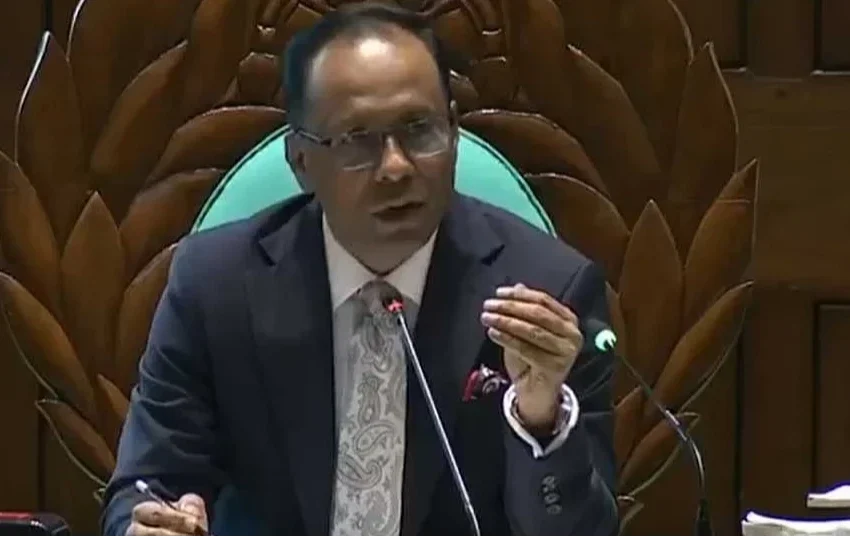
Deputy Speaker Barrister Kaysar Kamal on Monday interrupted Posts, Telecommunications and ICT Minister Faqir Mahbub Anam in Parliament, saying his lengthy explanation failed to address the core concern raised by a lawmaker over cyber bullying, character assassination and AI-generated fake content targeting women.
He also advised those preparing ministers’ parliamentary replies to come to the House better prepared so that responses directly address lawmakers’ questions.
The exchange took place during a discussion under Rule 71 of the Rules of Procedure after reserved seat BNP MP Salina Sultana raised a matter of urgent public importance regarding cyber abuse against women.
Presiding over the sitting, the Deputy Speaker stopped the minister while he was reading out provisions of the Cyber Security Act.
“Those who assist you in preparing answers to such questions should come here better prepared. The answer to the honourable member’s concern is not coming through here,” he said.
In response, the minister said his statement had further sections and requested the opportunity to complete it. The Deputy Speaker then asked him to focus on the main issue.
Earlier, Salina Sultana told Parliament that cyber bullying, character assassination and the spread of fake photographs, videos and misleading information generated through artificial intelligence are increasingly targeting women and people expressing dissenting opinions on social media.
She said such campaigns are causing social humiliation, severe mental distress and, in some cases, even driving victims to suicide.
“A woman’s tears have no political identity,” the MP said, demanding exemplary punishment for those involved in cyber bullying, character assassination and the misuse of information technology.
She also wanted to know what steps the government is taking to ensure a safer digital environment for women.
Replying to the notice, Minister Faqir Mahbub Anam said Bangladesh already has laws to combat cybercrime, although they are not effectively enforced in many cases
He then began reading provisions of Section 25 of the Cyber Security Act relating to blackmail, sexual harassment, revenge pornography, child sexual abuse material, sextortion and the dissemination of AI-generated or manipulated content.
The minister said such offences currently carry a maximum punishment of two years’ imprisonment, a fine of Tk 10 lakh, or both. Where the victim is a woman or a child under 18, the maximum punishment rises to five years’ imprisonment, a fine of Tk 20 lakh, or both.
After being asked to be specific, Mahbub Anam said the government is amending the Cyber Security Act to make it more relevant and effective in addressing emerging technological challenges.
He said the proposed amendments will explicitly criminalise the creation or dissemination of AI-generated or manipulated content intended to defame or humiliate individuals.
The amendments will also increase penalties for such offences, introduce a clearer legal definition of defamation and bring the deliberate creation and dissemination of false, distorted or misleading information intended to deceive or harm individuals, institutions, the public or the state within the legal framework.
During a supplementary question, Salina Sultana asked whether the government plans to establish a specialised cyber response team capable of detecting and removing AI-generated fake content quickly and bringing offenders to justice within 24 hours.
She also sought the government’s decision on introducing a one-stop cyber support service for victims.
In reply, the minister again referred to the cabinet committee and said it will consider the proposals before taking appropriate decisions.
He noted that cyber harassment affects both women and men and said the government is treating the issue with utmost importance.
Mahbub Anam said the National Cyber Security Agency is already assisting relevant authorities by identifying and analysing harmful online content, fake information and rumours.
He added that cyber security help desks have been established at ICT offices at district and upazila levels to provide advice and primary assistance to the public.
Women subjected to cyber bullying or digital harassment can also lodge complaints through the national 333 hotline, after which complaints will be verified and forwarded to the appropriate authorities for action, the minister said.
He further informed Parliament that a central software platform, titled the Cyber Incident Reporting System, has been developed to receive, assess and monitor cybercrime complaints and refer them to law enforcement agencies.
-UNB