
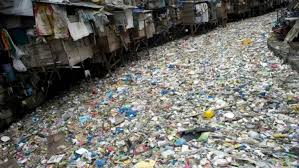
Bangladesh Government on Tuesday launched the National Plastic Action Partnership (NPAP), a platform aimed at bringing government agencies, businesses, development partners and civil society together to combat plastic pollution and advance a sustainable circular economy.
Environment, Forest and Climate Change Minister Abdul Awal Mintoo formally launched the initiative at a program at a city hotel in the morning, stressing the need for better coordination and effective enforcement of plastic waste management policies.
The partnership is a joint initiative involving the United Nations Development Programme (UNDP) Bangladesh, the Ministry of Environment, Forest and Climate Change (MoEFCC), the Department of Environment (DoE) and the World Economic Forum’s Global Plastic Action Partnership (GPAP).
Addressing the conference as the chief guest, Mintoo expressed appreciation to UNDP Bangladesh and the World Economic Forum’s Global Plastic Action Partnership for collaborating with the ministry and the Department of Environment to establish the platform.
He noted that plastic pollution threatens public health and ecosystems across urban areas, rivers, wetlands and coastal regions. At the same time, he said, plastics are deeply embedded in trade, employment, business activities and everyday life, making a comprehensive response necessary.
The minister called for measures covering every stage of the plastics value chain, rather than limiting efforts to waste disposal. He said a circular economy could curb plastic use, promote reuse, extend the lifespan of materials, strengthen waste collection and ensure resources remain in productive use for longer, while generating environmental, social and economic benefits.
Referring to the recently issued Guidelines for Plastic Waste Management 2026, Mintoo said the framework sets out the responsibilities of manufacturers, importers and brand owners and provides for the collection and recycling of plastic waste. Producers can fulfil their obligations either independently or collectively through producer responsibility organisations, he added.
However, he cautioned that the guidelines would deliver results only if supported by effective enforcement, dependable data, stakeholder cooperation, sufficient collection and recycling facilities, viable markets, transparency and accountability.
“Policies achieve their purpose only when they can be implemented effectively,” he said, underscoring the need for close cooperation among producers, regulators, researchers and local authorities.
Mintoo said several institutions were already engaged in plastic waste management in Bangladesh, and the country could build on those existing efforts. The NPAP would help coordinate their work, bridge information gaps and connect policy commitments with implementation, innovation with market opportunities, and national priorities with investment, he said.
Calling for contributions from all sectors, the minister urged businesses to develop innovative materials and industrial solutions, academic and research institutions to generate stronger evidence, and development partners to direct their assistance towards national priorities. He also encouraged financial institutions to explore investment opportunities in the circular economy.
He stressed that civil society organisations should ensure communities have a voice in the process, while workers involved in collecting, sorting and recycling waste should be encouraged to share their practical knowledge and identify their needs.
The minister said the partnership’s effectiveness should be judged by tangible outcomes rather than the number of meetings it holds. These outcomes, he said, should include better implementation of policies, stronger evidence and collaboration, greater investment, broader use of practical solutions and improved working conditions for people employed in the waste sector.
The event, held under the theme “Unifying Action to Move to a Circular Economy”, brought together around 150 representatives from government agencies, the private sector, development organisations, civil society, academia, research institutions and the waste management sector.
UNDP Bangladesh Resident Representative Stephen Rodriques delivered the welcome address at the event.
Other speakers included Sayed Monjurul Hoque, project manager of NPAP Bangladesh at UNDP Bangladesh; Clémence Schmid, director of GPAP at the World Economic Forum; Mohammed Solaiman Haider, additional director general of the Department of Environment; Shaikh Faridul Islam, state minister for environment, forest and climate change; and Dr Fahmida Khanom, acting secretary of the ministry.
Following the launch, a high-level panel discussion titled “Breaking Silos: Building a plastic Circularity Ecosystem” was held, moderated by Sarder M. Asaduzzaman, assistant resident representative of UNDP Bangladesh.
The panellists included Rezaul Karim, joint secretary (ENV-2K) at the MoEFCC; Parimal Sarker, joint secretary at the Local Government Division; Shadab Ahmed Khan, general manager and managing director of The Coca-Cola Company; Razinara Begum, director of Waste and Chemicals Management at the DoE; Sumaiya T. Ahmed, head of sustainability at PRAN-RFL Group; and Khadem Mahmud Yusuf, managing director of Bangladesh Petrochemical Company Limited (BPCL).
-UNB

